Ecuador and its World Heritage Sites

Ecuador and its World Heritage Sites

There are countries that amaze because of their size. Others, because of their diversity. And then there’s Ecuador: a small territory where the soul of the world beats strongly. In this land that embraces the Pacific, rises through the Andes, and reaches into the Amazon, coexist the World Heritage Sites recognized by UNESCO. They are open doors to history, nature, and living cultures that have endured through time.

From the first historic center ever declared a World Heritage Site to a fabric woven with patience and ancestral wisdom, each of these treasures holds a promise to encounter what is essential, beautiful, and authentic.

Historic Centre of Quito

Where history is written in stone and gold leaf
Iglesias de Quito

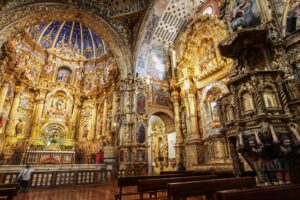
In the heart of the Andes lies one of the best-preserved historic centers in Latin America. Quito captivates with its baroque architecture, lively squares, churches covered in gold leaf, and an urban landscape that seems frozen in the 17th century. Walking through its cobblestone streets, it’s easy to understand why it became the first site in the world to be declared a UNESCO World Cultural Heritage Site in 1978. From El Panecillo hill to La Compañía church, Quito is not just a place to visit, it’s a place to admire and breathe in.

Galapagos Islands

The place where evolution became visible

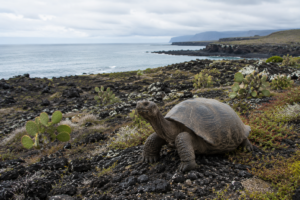
These magical islands have inspired scientists, artists, and travelers from all over the world. Their unique biodiversity, volcanic landscapes, and fearless wildlife make them a natural setting like no other. It was precisely this biodiversity that led UNESCO to recognize the Galápagos as a Natural World Heritage Site in 1978, in the same first list that included Quito. A journey to the Galápagos is a voyage to the very origin of life.

Sangay National Park

Extreme nature, resilient life
Parque Nacional Sangay - Patrimonio del Ecuador

Three active volcanoes, more than 300 lagoons, cloud forests, jungles, and highland moors make up this natural treasure hidden between the Andes and the Amazon. It is home to condors, spectacled bears, tapirs, and an astonishing variety of ecosystems within a single park. For its biodiversity and extreme landscapes, Sangay National Park was inscribed as a Natural World Heritage Site in 1983, making it one of the most diverse on the planet. A total immersion in the untamed.

Historic Centre of Cuenca

Harmony between history, landscape, and urban life

The Historic Center of Cuenca was declared a Cultural World Heritage Site in 1999 for its colonial architecture, perfectly integrated into the Andean landscape. The city was built upon the remains of the ancient Inca city of Tomebamba and preserves an orderly, elegant urban layout filled with churches, squares, bridges, and heritage mansions. It was also recognized for its ability to maintain its cultural identity over time, adapting to modernity without losing its essence. Cuenca is a living city that honors its past.

Toquilla Straw Waving

Memory, art, and dignity

Inscribed in 2012 as an Intangible Cultural Heritage by UNESCO, this ancestral Ecuadorian art represents a living tradition passed down through generations. The weaving of the toquilla straw hat requires not only manual skill but also a deep understanding of the fiber, the climate, and the artisanal process. Its value lies both in the technique itself and in its role as a cultural and economic symbol for the communities of Manabí and Azuay. Each hat tells a story of identity, resilience, and craftsmanship.

Qhapaq Ñan

Backbone of the Andean world
Qhapac Ñan - Ingapirca

Long before modern roads existed, there was already a vast network connecting the entire Andean world. In Ecuador, the Qhapaq Ñan crosses mountains, highland moors, and ravines, linking villages that still preserve their Inca heritage. Its value was internationally recognized in 2014, when UNESCO inscribed it as a World Heritage Site alongside Peru, Colombia, Bolivia, Chile, and Argentina a testament to the engineering genius of the Inca Empire. Walking its paths is a journey to the heart of the past.

The Marimba

The resonant heart of the Afro-Ecuadorian people

On the northern coast, music is not only heard, it’s felt. The marimba is the heartbeat of Afro-Ecuadorian communities, a symbol of their history, resilience, and joy. Instruments, songs, and dances intertwine in celebrations that ignite the spirit. It was precisely this living, integral character that led UNESCO to declare it an Intangible Cultural Heritage in 2015, alongside Colombia. A sonic legacy that resonates with its own strength.

Zápara Language

Guardians of the rainforest
Patrimonios Ecuador - Lengua zápara

Deep within the Ecuadorian Amazon lives a culture that sees the forest not as a resource, but as a mother. The Zápara people preserve their language, worldview, rituals, and oral memory as a sacred treasure. This spiritual and cultural richness was recognized by UNESCO in 2008 as an Intangible Cultural Heritage of Humanity, for its profound connection with nature and its fight for preservation. To know them is to open one’s mind to new ways of seeing the world.

El Pasillo music genre

When Ecuador sings from the heart

It is music, yes, but also memory, identity, and poetry. The Ecuadorian pasillo has accompanied generations with lyrics that speak of love, nostalgia, and belonging. It was inscribed by UNESCO in 2021 as an Intangible Cultural Heritage, symbolizing Ecuador’s emotional history and deep sensitivity. Listening to a pasillo is an intimate encounter with the nation’s soul.

Pasillo ecuatoriano, patrimonio del Ecuador

These heritage sites reflect the soul of Ecuador: cities that once pulsed with clay and gold, islands where the story of life is still being written, trails that connected empires, and parks where ecosystems remain alive. Exploring these World Heritage treasures is to understand that in this country, the past never fades; it simply changes form.

More similar content

About Us

Official Site of International Promotion of the Ministry of Tourism of Ecuador.

More from Ecuador

Receive news

We share useful information for your next trip to the country of the four worlds.

Social networks

www.turismo.gob.ec

2004-2023 Ecuador Travel. All rights reserved.

5 Ecuadorian forests that generate oxygen for the planet

5 Ecuadorian forests that generate oxygen for the planet

Nature amazes us with its subtle presence in each of its corners. Ecuador from the bowels of the Andes, Pacific Coast and Amazon generates oxygen expelled from the leaves of immense hectares of forest. In the country there is a diversity of climatic zones where trees that surprise with their beauty, color, shape and aroma grow.

Get to know a detail of some of the trees that grow and beautify the landscapes in the only country located in two hemispheres, where nature is part of everything and invites us to take care of it and protect it to receive its goodness and protection.

Life in flooded forests

In the Cuyabeno Fauna Production Reserve there are abundant underwater ecosystems. The characteristic trees of this area are the guarangos de agua, which grow in the areas adjacent to the Cuyabeno and Lagartococha rivers, these sites can remain flooded for several months. These trees grow in the sewage of canals and lagoon edges. The reserve is one of the most megadiverse on the planet, and in it you can observe: anacondas, reptiles, dolphins, otters, turtles, as well as orchids and other species that grow in unimaginable places. In addition, the area is home to indigenous communities such as the Siona, Secoya, Cofán, Kichwa and Shuar, which demonstrate the cultural diversity of the country.

Scented yellow flowers

Every year nature offers a natural spectacle in the arid forests of southern Ecuador. With the first winter rains, the giant Guayacán trees are watered a little at a time to bloom and light the sunlight on the ground with yellow flowers, which create giant carpets on the trails. Approximately 40,000 hectares of forest bloom during 7 days in the parishes of Mangahurco, Cazaderos and Bolaspamba during the months of December and January. Thousands of tourists admire this natural spectacle and one of the gastronomic delights “chivo al hueco”, a traditional preparation of its inhabitants.

Stories on paper trees

In the Andean region, at more than 3,500 m.a.s.l., polylepis trees, also known as paper trees, grow. The Andean moorlands show these spectacular trees that are dens for mischievous rabbits. This plant, believed to be native to Latin America, has a trunk that tends to curve, in which several layers of brown bark, similar to sheets of paper, are observed. Ecuador has the last remaining polylepis forest, with centennial trees in the ecological reserve El Angel, located in the north of the “Land of the Four Worlds”. The trees at this site are believed to have existed for more than 4,000 years.

Pink clouds in summer

The arupos are endemic ornamental trees of Ecuador and it is common to observe them in bloom during the months of July and August. Several parks and tourist attractions such as the Plaza de la Independencia, in the Historic Center of Quito, proudly display them. The height of the trees can reach 10 meters and there are two varieties of flowers among them fuchsia and white. Scientifically it is known as Chionanthus pubescens, meaning “snow flowers”. The trees remain green and when they bloom, they are seen with imposing fuchsia flowers that can remain alive for up to 40 days.

Strong mangrove roots

Colossal mangroves of more than 50 meters, the tallest on the planet, are located in the Cayapas-Mataje Mangrove Ecological Reserve, in the province of Esmeraldas. The population located in nearby cantons preserve the tropical rainforest ecosystem that has been part of Ecuador’s National System of Protected Areas since 1996. In the mangroves, dozens of inhabitants of San Lorenzo, Borbón, La Tola and Limones collect shells and crabs. In addition, in this area it is possible to learn about the Afro-Ecuadorian culture expressed in their songs, dances and music, to the rhythm of the marimba.

More similar content

¡Suscríbete ahora!

Descubre las maravillas del Ecuador, para que cada rincón y experiencia se conviertan en recuerdos inolvidables en tu viaje.

Form Newsletter